


By Mohamed Kamara
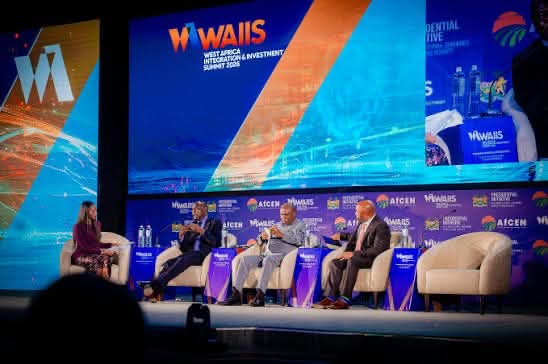
Following the recently concluded West Africa Integration and Investment Summit held in Lungi, Port Loko District, in the North-West Region, citizens from various walks of life have critically examined the investment prospects discussed at the summit, raising concerns about the benefits of investment agreements to ordinary citizens.
Mr. Idrisa Kargbo, a teacher in Makeni, told this medium that the real problem with regional political leaders is their longstanding enthusiasm for signing investment agreements without adequately implementing them.
He argued that even when such agreements are implemented, investors often reap the greatest benefits, leaving citizens in an even more difficult economic situation.
Meanwhile, Jeneba Ansumana Rogers, an economist in Freetown, said investment announcements emerging from summits should be treated with caution rather than celebrated prematurely.
She noted that announced investments are not necessarily realised investments, adding that Memoranda of Understanding (MoUs) do not automatically translate into factories, power plants or employment opportunities.
According to her, the summit provides an opportunity for regional leaders to meet and showcase their countries’ investment potential to prospective investors. However, she cautioned that expressions of interest from investors are only the beginning of a lengthy process involving protocols, procedures, negotiations and agreements.
She explained that even when the necessary arrangements are completed, investment projects require time to be structured and implemented, while their sustainability may also depend on political stability and changes in government.
Rogers further observed that one critical issue that received insufficient attention was the state of investment laws in Sierra Leone.
She recalled that a civil society organisation, Budget and Advocacy, had previously called for amendments to the country’s investment laws, rules and regulations to ensure that citizens benefit more meaningfully from investments.
She explained that investments involve several stakeholders, including shareholders, while investors also allocate risk budgets, conduct feasibility studies and encounter operational challenges and unforeseen costs.
However, she argued that these considerations should not justify host countries sacrificing their economic benefits at the expense of investors.
Rogers claimed that Sierra Leone’s investment laws and taxation framework allow investors to repatriate a significant proportion of their earnings, reportedly exceeding 65 per cent in some cases, thereby limiting the economic benefits available to the country.
She said this partly explains why citizens continue to complain that, despite the country’s abundant mineral resources, the socioeconomic conditions of ordinary people remain below acceptable standards.
Rogers also questioned the effectiveness of regional economic integration in West Africa, arguing that while countries in the region have made efforts to promote cooperation, tangible economic benefits for citizens remain limited.
She observed that football appears to be one of the few areas where regional integration is visibly demonstrated, while discussions about broader economic cooperation and investment opportunities continue from one summit to another without sufficiently translating into meaningful development for ordinary citizens.


